 Utku Kaynar
A Multiplier Everyone Buys
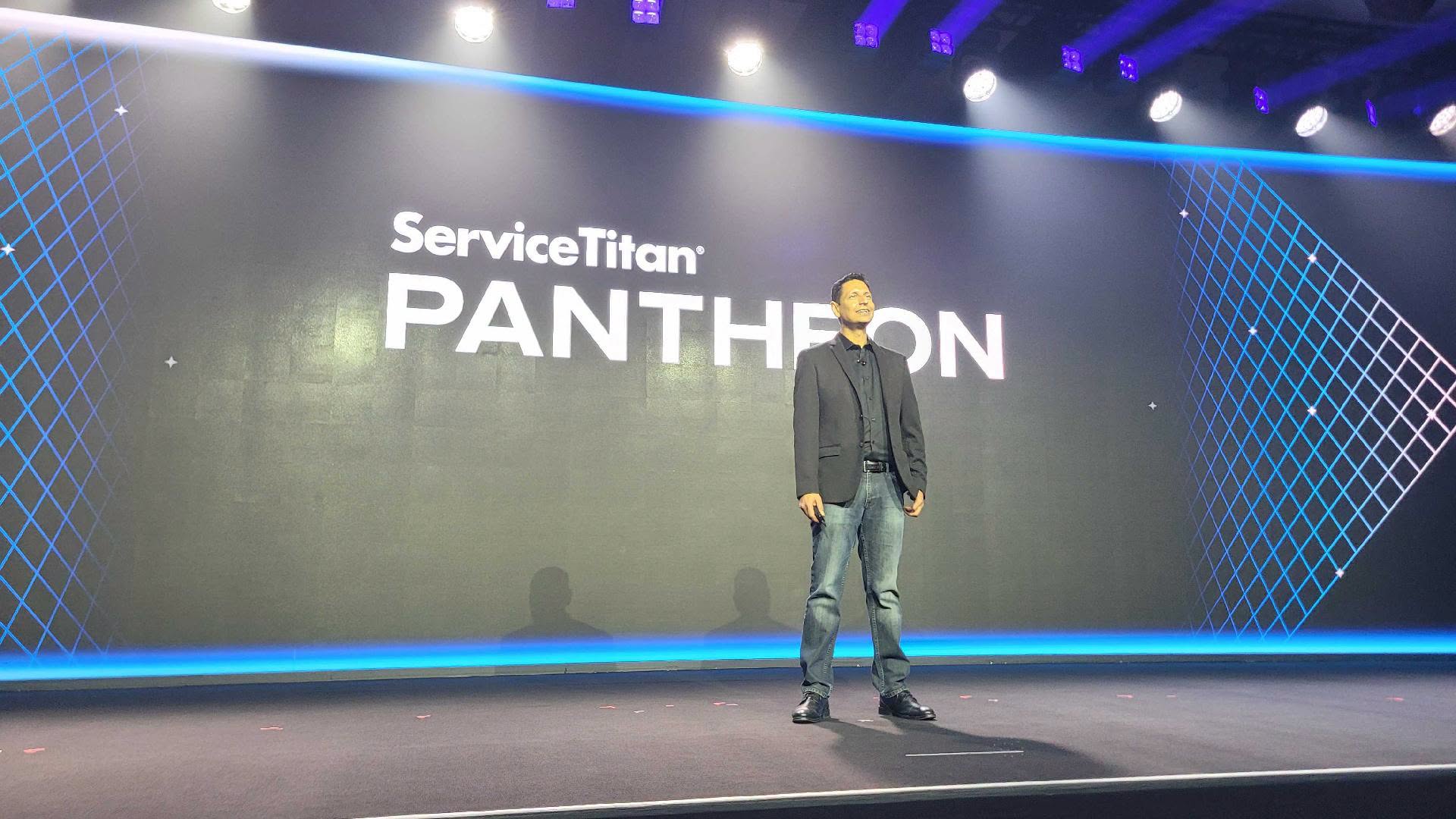
Photo © ServiceTitan. Courtesy of ServiceTitan.
Part two of eight in a short series: Pantheon 2026: A Strategical Analysis.
The best line at Pantheon was Vahe Kuzoyan's: "AI is not an equalizer, it's a multiplier."
The gap between shops that adopt and shops that don't will widen. Fine.
But a multiplier only creates an advantage if some of your competitors don't have it. ServiceTitan is selling the same multiplier to everyone in the room. Often to competitors in the same city.
So what does it multiply?
Start with demand
Furnaces fail at a rate. Roofs fail at a rate. Water heaters fail at a rate. Weather moves the curve; a good ad doesn't.
Nobody buys a second air conditioner because the targeting was clever.
In home services, demand is roughly fixed. Marketing doesn't create it. Marketing redistributes it. Every lead one shop wins is a lead another shop didn't get.
Everything below follows from that.
Same model, same auction
Now put three Max customers in Dallas.
Three ads agents, built by the same vendor, tuned on similar logic, bidding in the same Google auctions for the same broken air conditioners.
It gets worse. Abhi demoed capacity-aware spend: fifty-two hours short this week, so raise the budget by exactly this much. Sensible for one shop.
But a cold snap empties every board at the same moment. Every agent sees open capacity at the same moment. Every agent raises its bid at the same moment.
Correlated agents create correlated bidding. Correlated bidding raises the price of the click.
The winner of that auction isn't any of the three contractors. It's Google.
Homh has the same shape
Homh ranks contractors for consumers' agents.
Every contractor in Homh is a ServiceTitan customer. So every shop that moves up the ranking pushes another ServiceTitan customer down.
ServiceTitan collects from both of them.
One-company math
Ara Mahdessian's arithmetic was clean. Ten percent more leads, ten percent better booking, ten percent higher tickets. Revenue up 33%. Profit doubled.
Run it for one shop and it's true.
Run it for a city. The extra leads were someone else's leads. The better booking rate was someone else's missed call. The total number of furnaces that failed didn't change.
At market scale, the math nets out to share shifting between ServiceTitan customers, plus a bigger bill from whoever sells the clicks.
True for one company. False for the market.
Who actually wins
If demand is fixed and the tools are the same, the edge goes to whoever adopts first, hardest and with the most capital.
In the trades, that's increasingly the private equity roll-up. It has the operators to run Max at full speed, the budget to win the auctions, and the locations to justify a dedicated specialist.
Look at who was on stage. The customers in the videos ran nine-figure operations. Everything was framed for multi-location businesses. The three-truck shop wasn't in the story.
That's not an accident. ServiceTitan's real customer is becoming the consolidator.
And it's arming the consolidators against its own small customers. The same company that sold the independent shop its software is now selling the shop down the street a better weapon to take its calls.
That works until the long tail notices.
What the multiplier is really for
None of this means the agents don't work. They probably work very well for the shops that buy them first.
It means the pitch is about relative position, not absolute gain. Max doesn't grow the pie. It moves slices.
That's a fine product to sell. It's a strange thing to call an industry-wide transformation.
The question to ask
When a vendor promises your profit doubles, ask one thing:
Is my competitor buying the same thing?
If yes, you're not buying growth. You're buying a place in an arms race, and paying the arms dealer and the auction house.
In the next post, the constraint no multiplier touches: the technician.