 Utku Kaynar
The AI Said Hire Humans
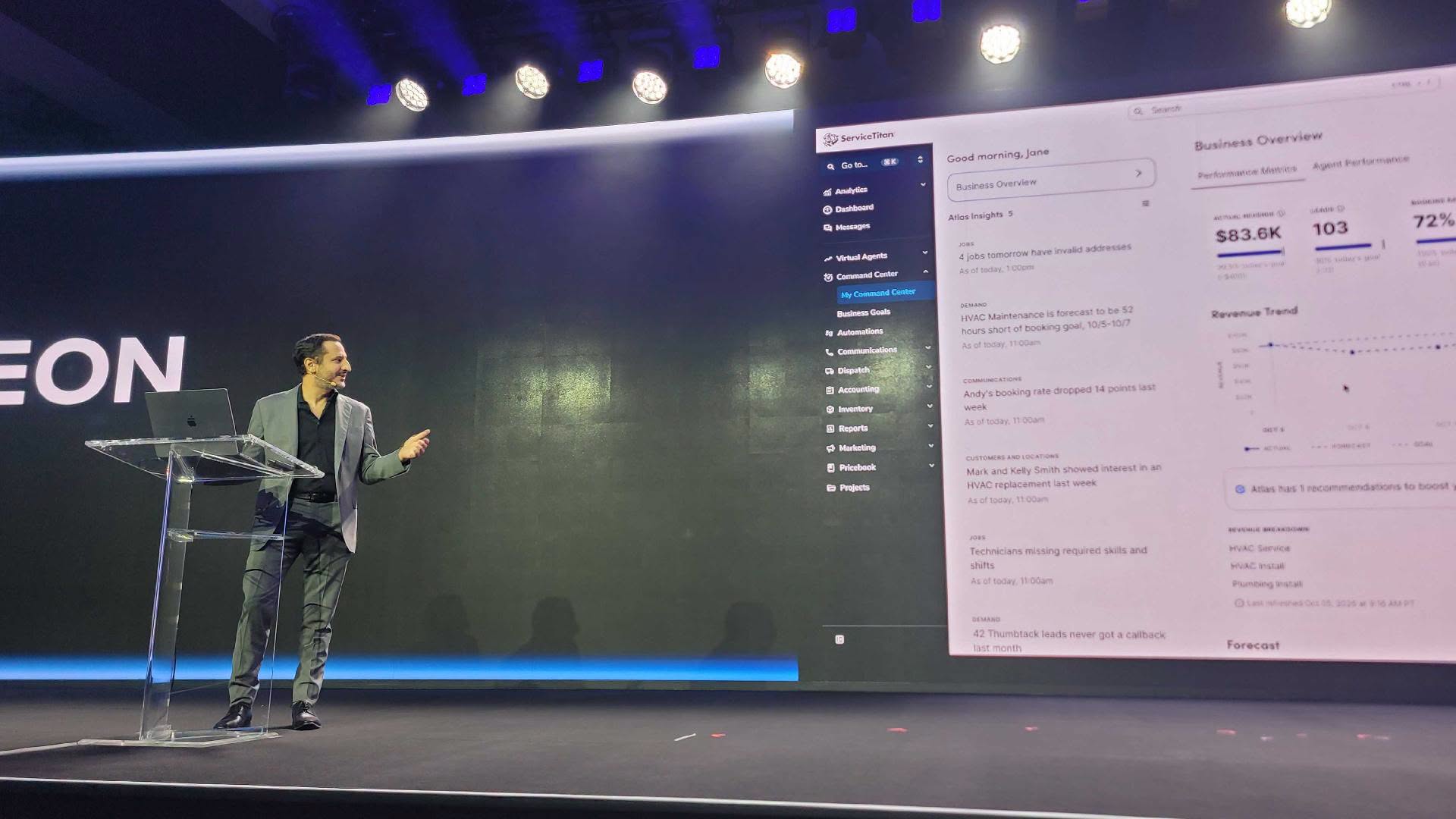
Photo © ServiceTitan. Courtesy of ServiceTitan.
Part three of eight in a short series: Pantheon 2026: A Strategical Analysis.
The most revealing moment at Pantheon wasn't in a keynote. It was in a customer testimonial.
Atlas ran a capacity analysis for a contractor operating in several markets. Its recommendation:
Hire three techs in Lansing. Hire four to six in Milwaukee. Hire three to four in Dallas.
Thirty agents, a coordination layer, a chief of staff. And the AI's top recommendation was hire people.
The real bottleneck
Ask any owner what limits growth. It's rarely leads. It's rarely software.
It's technicians. A chronic, structural shortage of people who can diagnose a heat pump, run a gas line or wire a panel safely.
That shortage isn't cyclical. Experienced techs retire faster than new ones arrive, and training a good one takes years.
Everything else in the business is downstream of how many qualified people you can put in trucks.
More revenue from the same trucks
Ara Mahdessian's promise was more revenue from the same truckloads.
That assumes slack. Trucks sitting idle. Hours waiting to be filled.
In peak season, most good shops don't have slack. They have a full board and a voicemail box full of calls they can't get to.
The CEO's own demo admitted it. To fit a high-value job into a full day, the system bumped a low-value customer and offered a $5 credit. Holding capacity for better jobs. Pulling forward the most valuable future work when someone cancels.
Those are clever. They're also triage. You don't need a system to ration capacity unless there isn't enough of it.
What the gap really is
Abhi's favorite metric was revenue realization. The room averages about 60%. The best shops reach the high 80s.
Some of that gap is sloppy billing. The invoice review agent will catch parts that never made it onto the invoice. Good.
But think about where the rest comes from. Trucks idle in April and October. Calls turned away in July and January. The shoulder season and the peak.
That's not a software gap. It's a capacity gap with a seasonal shape.
Software can smooth the curve. Book maintenance into the shoulder months. Fill cancellations. Route better.
It can't create a technician.
Remove the office, and the truck is all that's left
Here's the part that makes it worse.
Max is designed to replace office labor. Voice agents instead of CSRs. A marketing department with no people. Atlas instead of the office app.
Suppose it works. The office shrinks. The cost structure improves.
Now the only humans left in the value chain are the ones in the trucks. Every dollar of growth runs through them.
Automating the office makes the labor constraint more binding, not less.
The answer was on the roadmap
ServiceTitan did show one labor answer: a technician development agent that schedules techs into jobs that build their skills.
It's the right idea. It was a roadmap item, one agent among thirty.
It should have been the keynote.
Do the first-principles math. A tech takes three to five years to become fully competent. Compress that to twelve months, and you've created capacity no ads agent can match. Every other agent in Max gets more valuable when there are more qualified people to dispatch.
Whoever owns time-to-competence owns the industry's real bottleneck.
Why it wasn't the keynote
My guess is that it's harder to sell.
Agents that answer phones have a clean before-and-after. Agents that turn apprentices into journeymen take years to show results, and the results walk out the door if a competitor pays a dollar more an hour.
It's also less flattering to the pitch. "Your AI will tell you to hire people you can't find" doesn't close a Max deal.
But it's the truth the testimonial told.
What I'd ask
If you're a contractor evaluating any AI platform, ask how it helps you make more technicians. Not schedule them. Not track them. Make them.
If the answer is a roadmap slide, the platform is optimizing everything except the thing that limits you.
In the next post, the other way to grow revenue from the same trucks: bigger tickets. And why the homeowner's agent is about to take them away.