 Utku Kaynar
Two: Your Life
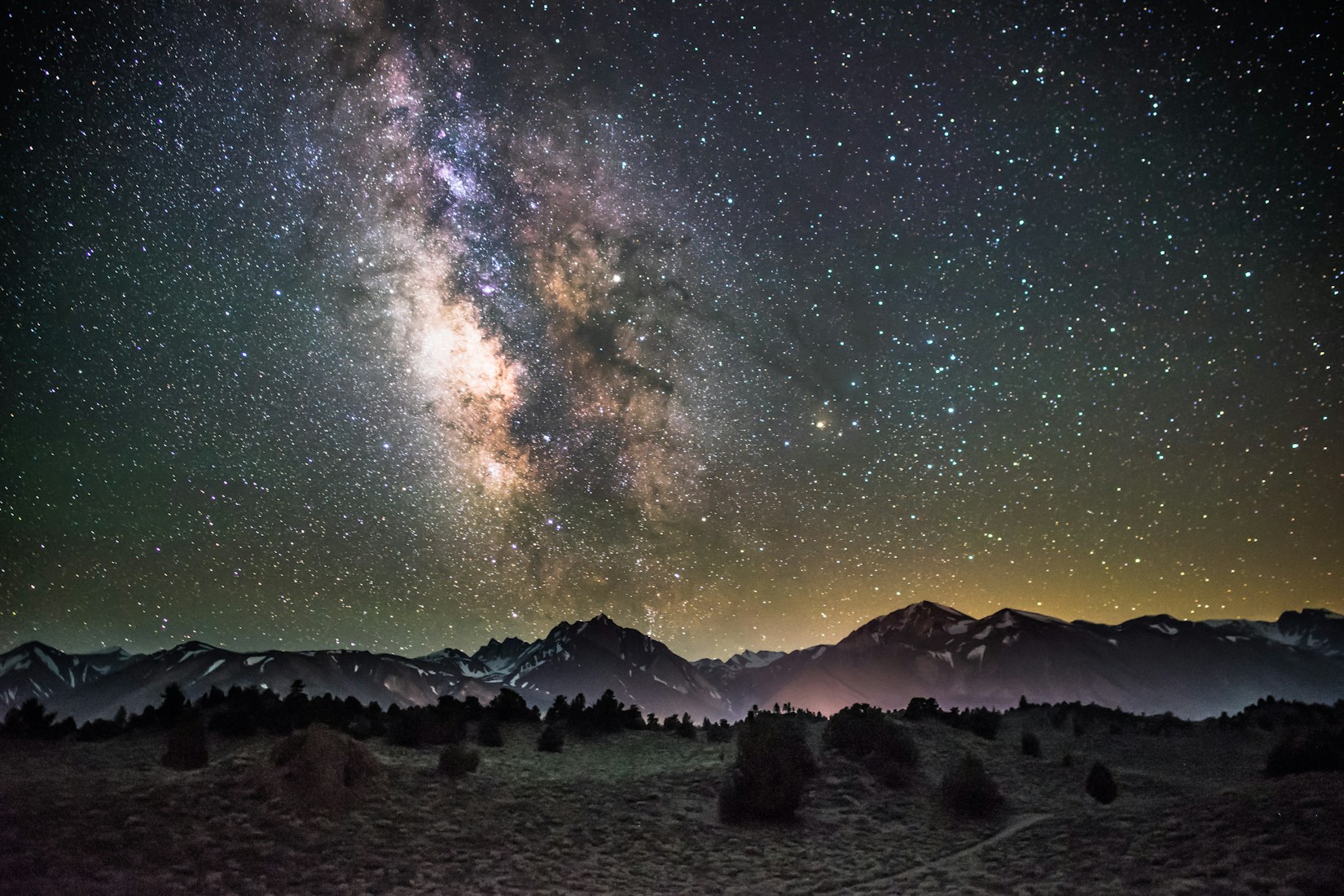
Photo by Robson Hatsukami Morgan on Unsplash.
Wednesday, November 7, 2018 / San Jose, California
Ada,
At night, somewhere far from the city lights, when you lift your head and look up at the sky, you see the endless darkness surrounding the Earth and the stars shining within it.
I do not know how old you will be when you read this. You were born on a very fortunate planet orbiting a young star in an insignificant corner of one of the millions of galaxies in a universe that is 13 billion years old.
We call that young star the Sun, and the planet where you were born—our home—the Earth.
Our home, Earth, is a 5-billion-year-old planet that is home to you, the entire human race, and billions of animals, plants, and living organisms. Our world and all of us are so fortunate that, had the Earth been just one percent farther from or closer to the Sun, the life we are part of might never have emerged, and we would have shared the fate of the trillions of other planets in the universe. We know that life on Earth exists thanks to the Sun, that the light you see during the day makes all life on Earth possible. We also know that life develops on its own when the right conditions arise.
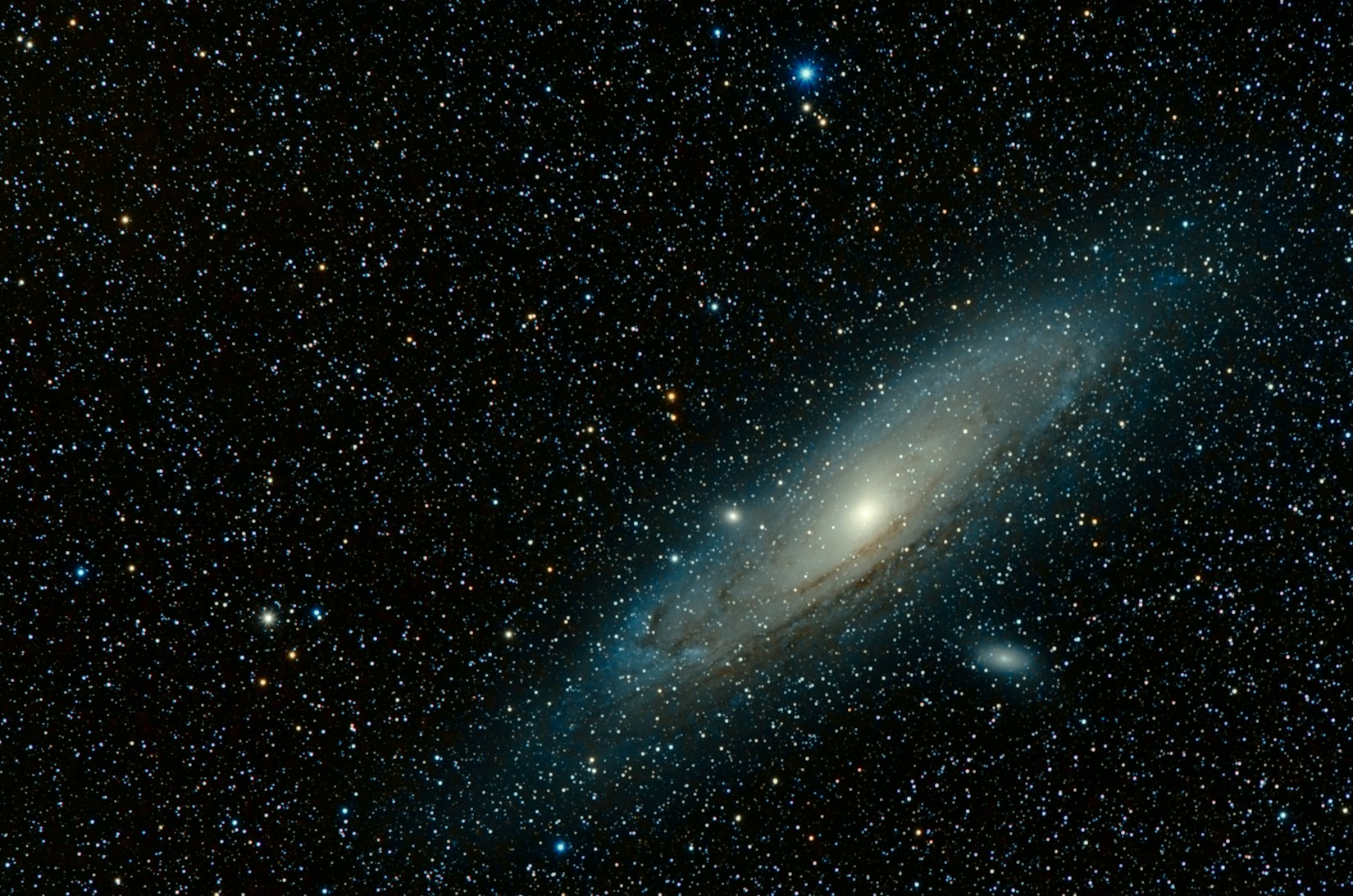
Photo by Guillermo Ferla on Unsplash.
The humans you belong to, known biologically as Homo sapiens, were, until a hundred thousand years ago, an insignificant species of ape living on Earth alongside at least six other human species similar to themselves. The right conditions arose, and this insignificant ape not only climbed to the top of its entire planet's food chain but also built a great civilization over which it ruled absolutely. A civilization in which all the planet's resources—water, soil, air, and other living things—came to serve human purposes.
Ada, the detailed history we know reaches back at most twelve thousand years. We could say that for roughly seven thousand of those years we began keeping records, however clumsily, and that over the last two or three thousand years we have stumbled our way toward building the civilization you are part of. You were born in the year 2018 AD. That means that for the last two thousand years we have regularly counted the Earth's journeys around the Sun, calling each one a year. When you were born, the average human lifespan in the world was eighty years, and it was rising. Perhaps by the time you read this it will have reached a hundred and ten. Who knows?
Do not let any of this give you the impression that humans are a species that acts in coordination and lives together in peace. Quite the opposite. I will tell you all about it.
But first, let us look again at the numbers you have been reading in this letter:
- A universe thirteen billion years old.
- An Earth five billion years old.
- A history of life three and a half billion years long.
- An advanced ape—the human—that has existed in its present form for two hundred thousand years.
- A civilization humans have been consciously aware of for twelve thousand years, and have been stumbling their way toward building for at most five thousand.
- An individual human lifespan of eighty, or at most a hundred, years.
And your fellow humans, whom you will encounter so often in your own life, who place themselves at the center of the universe despite all their helplessness.
Ada, like every other part of life, a human being is born, grows, lives, and dies. You are at the beginning of this biological process. Throughout your life, its meaning will keep changing depending on where you look at it from. And, like the rest of your species, you will forget the process—the key to how the universe, the Earth, and humanity arrived at this point—and slip into a perception with no before or after. Just like all of us.
Remember that this perception is one of the ways humans cope with the immensity of this grandeur we call the universe, and with their own relative smallness, insignificance, and ignorance. We can only escape our insignificance by forgetting it and giving importance to certain things within our lives.
That is the magic of a human life, my girl. On one hand, it is so insignificant that it might as well be disregarded; on the other, it is an incredible miracle, an extraordinary journey for the person living it.
You are the one who will make this journey, through all your conscious and unconscious choices, all your actions, and all the feelings that accompany them. Because in this epic adventure called the universe and life, of which we can grasp only the edges despite all our efforts, you are alive.
Live your life as a gift, and at the same time give it meaning as you would a duty. Work like mad to fulfill that meaning, and then, when the moment comes, have the time of your life. Know that this being called a human carries all the contradictions I have described: the great and the small, meaning and emptiness, coexist within life. You are neither entirely one nor the other.
Love, learn, live, and leave a legacy for those who come after you, my girl.
With love,
Dad.